South Australia

Artisan Cheese

by Christine Salins on May 2, 2012
20120502-074937.jpg

So easy and yet so hard. Making cheese, on the surface of it, is easy enough. But as Victoria McClurg, of Barossa Valley Cheese Co, says, “cheese waits for no-one”.

So we have to get a move on, donning all the necessary garb before we are allowed into her production kitchen in Angaston to deal with the tubs of curds and whey that are waiting for us.

I’m currently in the Barossa Valley with a group from Tasting Australia and have had a huge amount of fun making cheese with Victoria.

We’ve made a cheese called Primo Sale and as you can see from the step-by-step photos below, it’s been a relatively simple procedure of cutting through the curds (till they are the size of almonds), stirring the curds and adding hot water to bring the temperature up to around 38 to 40 degrees (which helps draw out the moisture).

20120502-075416.jpg

20120502-075525.jpg

20120502-075655.jpg

The cheese is then turned into hoops and transferred from one hoop to another a few times. This is probably the trickiest part, especially while it is still very wobbly. It’s surprising how quickly the whey separates from the curd and it starts to become a much firmer cheese.

Tomorrow it will go into a brine solution, and although it would be ready to eat then if you wanted to, it could also be aged for up to two months.

20120502-081212.jpg

Victoria (pictured below) trained as a winemaker but soon realised that her passion was cheese. She did three vintages in France and while she was there, was captivated by the local cheeses.

She opened Barossa Valley Cheese Co with her mother and business partner, Frances McClurg, in 2003.

20120502-081313.jpg

Sourcing milk from local dairies, they make 14 styles of cheese, specialising in soft white mould, washed rind and fresh curd styles.

20120502-081425.jpg

20120502-081646.jpg

Although the cheeses are now widely distributed, the company retains its artisan ethos and there is a delightful shop in front of the production facility in the main street of Angaston. It’s definitely worth a visit if you happen to be in the region.

www.barossacheese.com.au

20120502-081747.jpg

{ 6 comments }

Clare Valley

by Christine Salins on November 27, 2003
Published in Vacations & Travel Autumn 2003 edition.

“A lot of people wanting to go to the Clare Valley end up at the Riverland,” lamented a tourist operator in this beautiful South Australian winemaking region.

Already overshadowed by the Barossa, it must be the ultimate blow for Clare winemakers when travellers from Adelaide whiz past the turn-off for Clare and end up somewhere around the bulk-wine producing facilities of the Riverland.

Those who do find their way are richly rewarded with delightful scenery, historic towns and superb food and wine, including some ofAustralia’s finest riesling.

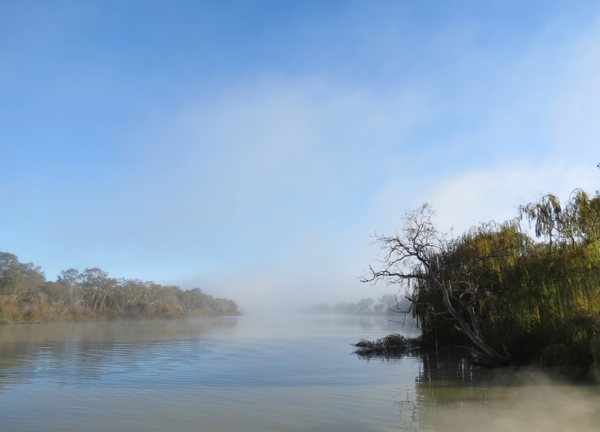
The fog created an almost ethereal effect over the wooded hills as we drove to Skillogalee Wines, where hosts Dave and Diana Palmer greeted us in the pretty cottage garden of their quaint restaurant and cellar door, located in a stone cottage built nearly 150 years ago by a Cornish miner who apparently did not approve of drinking. One wonders what he would think of his property now.

When the Palmers bought the property from the George family, who had planted the vines in the early 1970s, they decided to serve some food as a sideline. The idea blossomed into a fully-fledged restaurant, open seven days a week (10am-5pm) with a choice of seating outside under the olive trees or inside the cute cottage with doors so low that visitors have to duck their heads.

A trained chef, Diana oversees the menu which uses local produce wherever possible, especially on her vine pruners’ lunch. Dishes might include specialities such as lamb from nearby Burra, linguine in a creamy riesling sauce, skewered yabbies with cucumber and coriander salad, or blissful little roulades of roasted red capsicum and Woodside goats’ curd. Picnic baskets are available by arrangement.

Last year the Palmers bought a neighbouring property with bed and breakfast accommodation in the Windermere Cottages. A stone farmhouse is being restored to provide additional accommodation.

Skillogalee produces an excellent riesling, an aromatic, spicy gewurtztraminer in theAlsacestyle,shirazand other wines from low-yielding vines.

A great way to explore the valley is by walking or cycling the Riesling Trail, which follows the old railway line betweenAuburnand Clare. The 27km route is lined with vineyards, old stone villages, historic wineries and country hotels. The line has been covered with gravel, making it easy to walk on, and bikes are available for hire at either end.

The trail starts at Mt Horrocks Wines, located in the formerAuburnrailway station and beautifully renovated by winemaker Stephanie Toole. She buys hand-picked grapes from highly respected Watervale growers and carefully crafts her wines, fermenting them in French oak. The cellar door and gardens are a showpiece, where visitors can relax over a light lunch at weekends.

Auburnis also the home of Taylors Wines, the largest of theClareValleywineries with a 500ha vineyard. Established in 1972, it is open daily.

While the valley excels at riesling, many of its reds are also worth seeking out, including those from Leasingham, which has been an integral part of the valley for more than 100 years. Its cellar door in Clare is open daily.

With a combined 30 years’ experience in the wine industry working for larger wine companies, Jane Willson admits that she and partner Steve Wiblin should have known better than to introduce another label into the marketplace.

Yet wine drinkers would have been the poorer if this enterprising duo had not decided to strike out on their own with their Neagle’s Rock label. After several years of resurrecting vineyards and buildings, they now have a cellar door and restaurant, George of Clare, serving creative food seven days and two nights a week.

Smack bang near the Riesling Trail is the chic Brice Hill Vineyard Restaurant, where I had desserts to die for: spiced quince tartlets with mascarpone infused with lavender honey, and almond meringues topped with toffee grapes and chocolate vine leaves. Paul Borland, who manages the restaurant with his wife Ally, previously worked as a chef at Peppers Mt Broughton in the NSW Southern Highlands. A downstairs wine bar features more casual meals than the fine dining upstairs.

One of the valley’s best-kept secrets is the restaurant at Eldredge Vineyard, where Amanda Waldron and Philip Scarles, who trained in classical French cuisine inLondon, serve Mediterranean-inspired lunches from Thursday to Sunday. They have established a niche for their gourmet preserves sold under the London Hill brand. They have planted an orchard that will eventually supply all their fruit and berries, buy olives and saltbush lamb locally, and raise their own free-range poultry.

One of the Clare Valley’s newest cellar doors, Kirrihill Estates, is the centrepiece for a $10 million ‘winery without walls’, with a cantilevered roof and sails to provide natural light, and a sloping site which takes advantage of gravity in the production process.

At the other end of the spectrum, Sevenhill Vineyard has a history dating back to 1851 when it was established by the Jesuits for sacramental wines. They still run it, albeit with a broader range of wines, offering tastings and sales Monday to Saturday in the old monastery cellars.

At nearby Thorn Park Country House, David Hay and Michael Speers pamper their guests with fine food and wine, warm hospitality and cooking classes. Their elegant 145-year-old stone and slate homestead has six guest rooms. Hay is a self-taught chef but has a flair with food, his training as an interior designer having given him an eye for detail.

HistoricAuburn, birthplace of Australian author and poet C J Dennis, was originally known as Tateham’s Waterhole, hence the name for Tatehams restaurant. Swiss owners Mike and Isabelle Jeandupeux have turned an underground passageway of the former general store into a fabulous cellar and their menu emphasises fresh produce in dishes such as riesling and truffle mousseline, and seasonal fruits withAuburnhoney jelly. They have four guest rooms with ensuites.

While it is grapes that have put the valley on the map, Tony and Susan Thorogood make their wine from apples. Their Thorogoods of Burra products are very sophisticated, although the manufacturing process is anything but as the wines are handcrafted in much the same way cider was made 100 years ago.

The Thorogoods arrived in the valley in 1989 and immediately fell in love with Burra. ‘We loved the old town, the countryside reminded Susan of the Yorkshire Dales where she grew up and I liked the rolling hills and fertile valleys,’ Tony said.

From their mudbrick cellar, opened in 1999, they sell fine apple wines and vintage ciders with delightful names such as Gold Dust, Misty Morning and Old Sleepy: all very appropriate when an excess of liquid gold brings on that sleepy feeling.

© Christine Salins

{ 0 comments }

Barossa Vintage Festival

by Christine Salins on May 14, 2003

Published in The Canberra Times Food & Wine section, 14 May, 2003.

The National Riesling Challenge, held earlier this year, put Barossa producer, St Hallett, on the map inCanberra, but recognition at home for its Eden Valley Riesling had already come in the form of a win at last year’s Barossa Wine Show.

And now chief winemaker, Stuart Blackwell, has added to the accolades by being named 2003 Barossa winemaker of the year.

The award was presented at a declaration of vintage ceremony held as part of the Barossa Vintage Festival, which recently wrapped up a week of frolicking, from dinners and concerts in the wineries to a festival parade, winery tours and the popular Yalumba harvest market and cooking school.

The 2002 St Hallett Riesling, with its citrus notes and crisp natural acidity, epitomises the style of wine being produced in theEdenValley, adjoining the Barossa. The 2001 vintage of the same wine was served at Legends of the Long Lunch, one of the most popular events on the Vintage Festival calendar. This year’s lunch featured two Australian wine writers, Phillip White and Tim White, and one New Zealand writer, Paul White, who spoke eloquently about their passion for wine over a lunch of roast duck with star anise tamarind glaze.

The dish was matched with St Hallett’s 2000 Blackwell Shiraz, a big, bold wine just like the man behind the label, Bob McLean, who used the occasion to hand over the reins to winemaker Blackwell. The grapes for the Blackwell Shiraz come from non-irrigated bush vines that are between 70 and 100 years old, producing tiny yields of highly concentrated fruit and resulting in a wine with chocolate and soft, ripe berry characters. It’s a style unique to the Barossa and a wonderful legacy for Australian wine in general.

Since arriving at St Hallett in 1984, Stuart Blackwell has established the winery’sshirazas quintessential Barossa, not only with its flagship Old Block Shiraz  but also with Blackwell and another Shiraz called Faith. In a region with more than its fair share of outstanding winemakers, Blackwell’s award as Barossa winemaker of the year is no mean feat, especially because the winner is nominated by his or her own peers.

During the festival, St Hallett’s 2002 Riesling was offered for tasting alongside Peter Lehmann’s 1997 Reserve Riesling, also from theEdenValleyand another winner at the National Riesling Challenge in Canberra, where it took out the museum class. Together, the two wines show how the valley can produce riesling that not only drinks beautifully while young but also develops into complex, rich wines with age.

Peter Lemann’s chief winemaker, Andrew Wigan, says of the 1997 Reserve,

‘We’ve been selecting the finest parcel of the vintage since 1987 and held it back from release for five years so we can get those wonderful lime characters and honeyed overtones, yet it still finishes dry with the austerity and breeding that Eden Valley is known for.’

Peter Lehmann Wines also recently released a 1998 Reserve Semillon ($24), so that consumers can appreciate the richer, fuller-flavoured characters of bottle-aged wine. In contrast with the zestry citrus fruit characters of young Barossa Semillon, it has delicious layers of honeyed fruit.

In the mid 1990s, winemaker Grant Burge thought Semillon was going to become THE Barossa white. Now he is not so sure, consumer demand for it being cooler than he expected. “In the last four or five years, winemakers have tried to lay off the oak and I think that’s very good for the style,” he said.

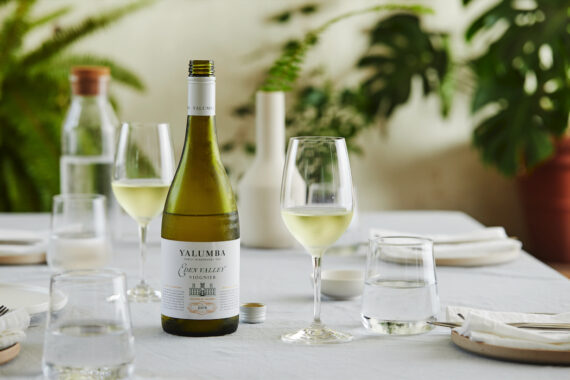
Although the Barossa is best known for riesling andshiraz, Burge’s success with Semillon shows it is capable of producing other styles as well. Yalumba Wines, for example, is doing marvellous things with viognier, its 2002 Eden Valley Viognier showing just how far it has come after 20 years of devotion to this rareRhonevariety. The 2002 vintage has a rich, long palate with intense apricot notes and more floral characters than in previous vintages.

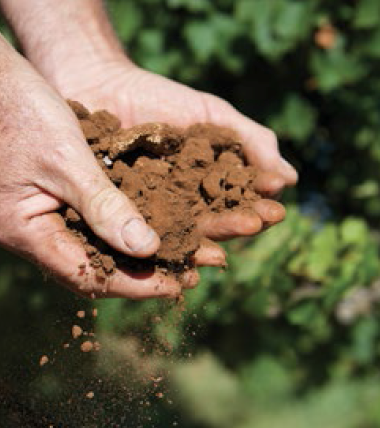
Andrew Ewart, chief winemaker at Mountadam, believes the character common to allEdenValleywines is their acidity. He attributes this to the soils, which unlike those in the Barossa proper, are sandy and free-draining: ‘You can put irrigation on here but it tends to go straight through.’

Henschke Wines produces a cabernet fromEdenValleyfruit, its 1999 Cyril Henschke a tribute to its namesake who planted cabernet in theEdenValleyas early as the 1960s.

Perhaps one of the best bargains coming out of theEdenValleyis the 1997 Miranda Shiraz Cabernet ($28). The fruit comes from 50-year-old vines that are virtually dry-grown, and the wine has a generosity and depth although the tannins are fine and soft.

Consumers after a blockbuster red need look no further than the Barossashirazproduced under a range of wonderful labels such as E & E Black Pepper, Saltram No 1, Bethany GR6 Reserve, Centenary Hill, Elderton Command Shiraz, Peter Lehmann Stonewell, Mountadam Patriarch and Grant Burge Meshach.

And then of course there is the icon Henschke Hill of Grace, which has gone beyond all reason to fetch extraordinary prices: $38,000, to be precise, at the Penfolds Barossa Rare Wine Auction held during the festival. The money was paid for an imperial (six-litre) bottle of the 1998 vintage.

The atmosphere in Penfolds’ barrel hall was electric as the 154 lots of rare and sought after wine were auctioned, culminating in the sale of an imperial of 1998 Grange for a world record price of $64,000. It’s a charity auction, with proceeds going to the vintage festival, boding well for the success of the next one in two years time.

Although commonly known as ashiraz, Grange often has a small amount of cabernet sauvignon, the 1998 vintage having around three per cent. It has just come onto the market, at around $395.

Wolf Blass puts more cabernet thanshirazinto its Black Label wine, another classic. The current release 1999 Black Label is the 27th vintage of this much awarded wine, and while the cabernet comes from McLaren Vale, most of the shiraz comes from the Barossa (the blend is 53 per cent/47 per cent).

It sells for $125, but if you want to come down a peg or two, there’s the 2001 Grey Label Cabernet Sauvignon for $40 or the 2001 Brown Label Shiraz for $37.

The enormous Wolf Blass winery was the setting for the Barossa Vintage Festival’s flagship event, Fire, Feast & Ferment. Fire trucks, fire eaters and coopers shaping oak barrels over open flames, greeted festival goers who were served a feast of platters at long tables set up in the barrel hall.

Barossa chefs drew on their superb regional produce, including Barossa chook and Linke’s lachschinken (a ham-like salmon), with guests helping themselves in the spirit of sharing that the festival has come to represent.

© Christine Salins

{ 0 comments }