Tasmania

Exiled: The Port Arthur Convict Photos.

by Maurie O'Connor on October 29, 2011

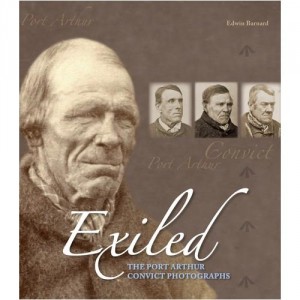
Exiled. The Port Arthur Convict Photos. By Edwin Barnard. Published by National Library of Australia, $39.95, softcover, 224 pages.

ExiledDenisDohertyLooking at the remarkable photographs in Exiled, you cannot help but be struck by the weary and grim expressions on the faces of the men.  Photographed most likely in 1874, these are the faces of some of the last inmates of the notorious Port Arthur penal settlement.

They are men who, for the most part, had suffered a lifetime of incarceration, harsh treatment and corporal punishment.  Their survival is remarkable considering that most of them were transported to Australia in their early twenties and had been convicts for over 30 years.

Thomas Cahill was only 12 years old when transported from County Wicklow in Ireland for the crime of vagrancy.  When photographed, he was only 41 but looks more like 60.

No one knows why they were photographed or who the photographer was, but we can be thankful for this unique historical record, uncovered by Edwin Barnard while conducting other research.

Barnard then conducted additional research on the convicts and adds context and colour with some fascinating stories of the men in the photographs.

ExiledDenisDoherty

One of the most amazing stories is that of Dennis Dougherty from Donegal, who in 1833, at the age of 18, received a 14-year sentence for desertion.

He was finally given a ticket of leave in 1876 after 43 years as a convict, hard labour at Norfolk Island and Port Arthur, about 3,000 lashes, numerous escapes and long periods of solitary confinement. Doughty fought the system every inch of the way and was regarded as one of the worst convicts.

In 1872, he was interviewed by Anthony Trollope who was visiting Port Arthur and told the famous writer that he “was broken at last”. Trollope expressed some sympathy for the man who likened himself to a caged bird forever trying to be free.

Barnard provides some fascinating background and additional information about the convict era as well as the circumstances from which many of the convicts came.  The book includes   a wealth of drawings, prints and other photographs, as well as those faces and the stories engraved on them.

For anyone with an interest in Australia’s history and our convict past, this book is an absolute collector’s item.    Exiled

{ 0 comments }

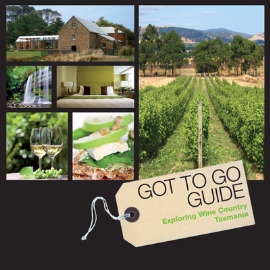
Got To Go Guide: Exploring Wine Country Tasmania

by Christine Salins on October 16, 2011

Got To Go Guide: Exploring Wine Country Tasmania. By Trudie Michels. Road Trip Publishing, $39.95, softcover, 227 pages.

This guide to one of Australia’s most bountiful food and wine regions is self-published but what immediately strikes you is what a high quality production it is.

Slickly organised with superb photography and quality entries about the food, wine, accommodation and attractions in the island state make this an essential travelling companion for anyone planning a Tasmanian sojourn.

Ian Parmenter, who wrote the forward for the book, describes Tasmania as not just the Apple Isle but the Total Gourmet Isle, because of its incredible array of produce, from mushrooms, seafood, edible seaweeds and truffles, to manufactured products, cheeses, wine, beer and even whiskies.

Got To Go Guide

It also boasts some exceptional chefs, as well as superb wines which are most definitely under-rated in the marke
Trudie Michels was well-poised to write about Tasmania’s gourmet offerings, having been involved in tourism, hospitality and marketing for more than 20 years.tplace.

A Melbourne-based food and wine consultant who has travelled extensively in wine regions around the world, she is a keen photographer and was responsible for most of the images in the book.

While it is attractive enough to sit on the coffee table, it is also an extremely informative and functional book, and it seems Michels has thought of everything, right down to the inclusion of a bookmark which can be detached from the inside back cover.

The book is organised by region, with each section kicking off with the essentials and a snapshot “sense of place”.

There are maps and suggested itineraries, details of opening times and useful contacts.The topics covered vary for each region but generally include listings of food producers, events, restaurants and cellar doors, suggested walks, historical notes and other snippets.

Importantly, none of the businesses have paid to be included in the book, but nor was there any intention to rate or review them.

The reader is merely presented with as much information as possible, and left to decide which ones accord with their own food and wine preferences.

Some of the author’s top picks are provided in breakouts throughout the book.

Road Trip Publishing plans more Exploring Wine Country books including Victoria, South Australia, New South Wales, Western Australia and Queensland, and if they are as well-researched and presented as the Tasmanian edition, Michels is clearly onto a winner.

{ 0 comments }

Cradle Mountain Lodge

by Christine Salins on November 27, 2009

Published in George magazine.

Wombats might look like fat, sleepy creatures that travel at a slow plod, but they can turn on the power when they need to, running at speeds of up to 40 km an hour. I know this not just because I’ve been told it’s so, but from first-hand experience.

I’m not sure who was more surprised by our close encounter atTasmania’s Cradle Mountain Lodge, but I do know who was able to get out of the way quickest – and it wasn’t me.

Wombats are just some of the abundant wildlife that make a visit to the Cradle Mountain-Lake St Clair National Park so magical.Voyages Cradle Mountain Lodge has the World Heritage listed park as its backdrop, its cabins nestling so discreetly into the bushland that the smoke curling from their chimneys is often the only sign of habitation.

The trails and boardwalks that wind their way between the cabins and the main lodge building are frequently shared with wallabies and possums,  practically guaranteeing an encounter with the local wildlife. Venture into the National Park and you might also see Tasmanian devils, spotted-tail quoll, green rosellas and, if you are lucky, platypus.

On our nocturnal wildlife-spotting tour, it was a thrill to see the spotted-tailed quoll, or tiger cat as it was once known. The white spots on its body and tail made it easy to identify in the dark. The wombat might have been able to outrun me but thankfully his cohort stuck around long enough for us to have a good look.

The native animal viewing tour is one of a wide range of activities available to lodge guests, from complimentary walks, briefings and slide presentations, to activities for which charges apply, such as horse-riding, mountain bike riding, daily wine and cheese tastings, fly fishing tutorials, four-wheel-drive bikes, canoeing on Dove Lake (summer) and tobogganing (winter).

The Cradle Mountain valley was formed by glacial movement more than 20,000 years ago, the ice melting around 10,000 years ago to reveal a stunningly beautiful landscape with rugged mountain peaks and lakes that are so clear they produce a mirror image. It’s a humbling feeling walking in ancient forests towered over by King Billy pines that are more than 1000 years old.

The weather is unpredictable so even in summer it’s a good idea to bring layers of clothes, spare shoes and a wind/rainproof jacket. A sign in the National Park warns visitors that there are only 32 sunny days a year. Only in such a harsh climate can such breathtakingly beautiful wilderness exist.

But while long-distance hikers might want to stick to the warmer months, those who are looking for a relaxing getaway will find it has year-round appeal. In fact, Voyages Cradle Mountain Lodge is especially inviting in winter when the brisk air sharpens the appetite for delicious meals and log fires.

The lodge’s King Billy suites are wonderfully romantic with double-sided open fireplaces, private hot tubs and panorama windows looking out over picture-postcard scenery.

The entire resort underwent a $3.5 million makeover late last year, with acclaimed interior design firm Pike Withers giving the guest rooms a stylish contemporary look. Yet their natural, almost rustic external appearance blends harmoniously into their surroundings, every cabin offering views of either theLodgeLake, thePencilPineRiveror the native myrtle forests.

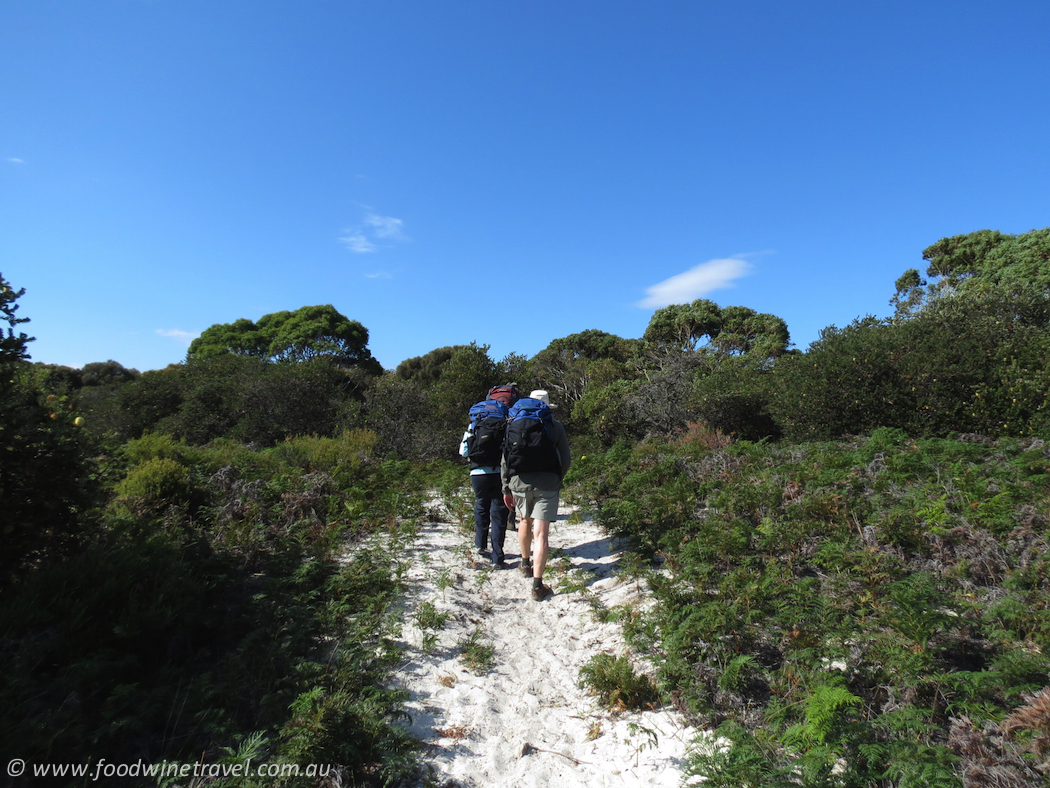
The best way to appreciate the Tasmanian wilderness is to take a walk on the wild side. Five walking tracks are accessible from the lodge, and there are a further 15 walks within the national park. They range in duration from about 20 minutes to all day and even longer -CradleMountainis the starting point for the world-famous Overland Track, a six-day walk.

The walks can be done independently but guides can enhance the experience by pointing out items of interest such as the native mountain pepper, waratahs and lemonthyme, with its heavenly lemon scent. You’ll also see, Nothofagus Gunnii, commonly calledFagus,Australia’s only native deciduous tree. It’s a striking sight as its leaves change colour in autumn to gold, orange and deep red before falling.

The easiest walk is the 20-minute Enchanted Stroll, which meanders along the banks of thePencilPineRiver, past buttongrass plains, teatree thickets, eucalypt woodlands and mossy myrtle forests.

Another easy walk, which like the Enchanted Stroll leaves from Voyages Cradle Mountain Lodge, is the King Billy Track which leads you on a 40-minute ramble past myrtle, sassafras and King Billy pines up to 1500 years old.

One of the nicest walks is around Dove Lake, with its spectacular views of Cradle Mountain. It takes about two hours and is suitable for all ages and fitness levels. The boardwalk weaves through rainforest, past quartzite beaches and alpine heath.

Hiking to the summit ofCradleMountainis a must for the more adventurous. It’s a hard walk which takes six to eight hours and includes some scrambling over rocks, but there’s a feeling of being on top of the world, especially on a good day when you can see over most of northwest Tasmania.

Bliss is the only way to describe what it feels like to relax in the lodge’s Waldheim Alpine Spa after a day of hiking. The spa has beautiful views over the valley and the Pencil Pine River, and there is a double treatment room for those who want to share the experience with a partner or friend.

The spa uses an Australian product range called Sodashi, an ancient Sanskrit word which means wholeness, purity and radiance – appropriate given the pristine beauty of the region.

Fancy a bath? You can wallow in a luxurious creamy milk bath, take a refreshing blue gum bath or enjoy the signature bath, an aromatic blend

of frankincense, sweet orange, pine and cedarwood.

A one-hour treatment for aching legs and tired feet begins with a blue gum foot soak followed by polishing with an exfoliating blend of green clay, eucalyptus and peppermint, and a foot massage with peppermint foot balm.

A number of face and body treatments are tailored specifically for men. The one and a half hour Mountain Man treatment includes time in the steam room followed by a body wrap, scalp treatment andVichyshower. Man Maintenance is a one-hour facial treatment with soothing mists of sandalwood and cypress.

All spa treatments include access to The Sanctuary, a therapeutic retreat with steam room, sauna, hot-tub, cool plunge pool and relaxation lounge. Casual access is available for $25.

More indulgences can be found in the lodge’s Highland Restaurant and its walk-in wine cellar, where Tasmanian food and wine feature strongly on the menu. The Tavern Bar & Bistro has a more rustic ambience and bistro-style meals.

For food and wine devotees, the annual Tastings at the Top is the ultimate indulgence. Held in June for the past 12 years, except last year when the refurbishments were taking place, it has become one ofTasmania’s premier events. Guests come from all overAustraliato enjoy food and wine tastings, cooking demonstrations, talks and gourmet dinners.

Tasmania has a burgeoning number of boutique food and wine producers, some of whom can be visited in a self-drive tour from Cradle Mountain. Picturesque Lake Barrington Estate vineyard is about an hour’s drive away, while a little further afield you’ll find Ashgrove Farm Cheese, which makes a fantastic cheddar.

Lactos Tasmania, at Burnie, has a wide range of cheeses for tasting and sale, as well as shortbread biscuits, honey, mustards, sauces, jams and condiments. Tazmazia is a honey boutique, pancake parlour, lavender farm and a complex of seven mazes at Lower Crackpot – not kidding, it’s just across the way from Paradise and down the road from No-Where-Else. Yes, the names are genuine!

Other attractions within an hour’s drive of Cradle Mountain include the scenic Mole Creek Caves, Trowunna Wildlife Park where you can see Tasmanian devils being hand-fed, and the township of Sheffield, where every available wall is decorated with murals.

Sheffield nestles under Mount Roland, where pioneering conservationists Gustav and Kate Weindorfer honeymooned in 1906. The Weindorfers loved the Cradle Mountain region and their alpine chalet, Waldheim, is a fascinating reminder of the early days of European settlement.

The Weindorfers climbed Cradle Mountain in 1910, Kate being the first white woman to do so. As they rested on the 1545 metre summit, Gustav Weindorfer is said to have declared: “This must be a national park for the people for all time.”

Waldheim, which means “forest home”, received its first guests in 1912, and 10 years later, Gustav’s vision became a reality when an area of 158,000 acres from Cradle Mountain to Lake St.Clairwas proclaimed a Scenic Reserve and Wildlife Sanctuary.

Cradle Mountain Lodge’s Weindorfers Lounge, named in memory of Austrian-born Gustav, is a cosy room with deep leather armchairs and crackling fire, where you can read the newspaper, play boardgames or settle in with a warming glass of cider or whisky.

It’s a far cry from the humble abode that Weindorfer built to cater for his visitors, but one suspects he would have been very happy that hospitality is still being offered to those wanting to share in a slice of paradise.

Fact file:

Information on Voyages Cradle Mountain Lodge:
www.cradlemountainlodge.com.au
Reservations: +61-1300 134 044

Information on travelling in Tasmania: 
Tasmanian Travel Centres: +61-1300 655 145
www.discovertasmania.com.au

{ 0 comments }