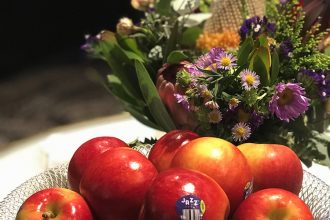
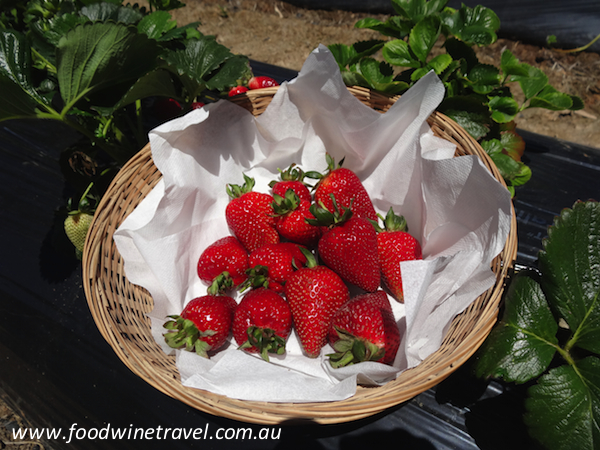
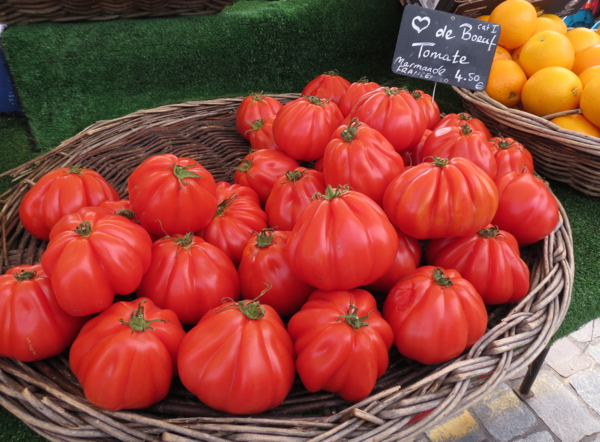
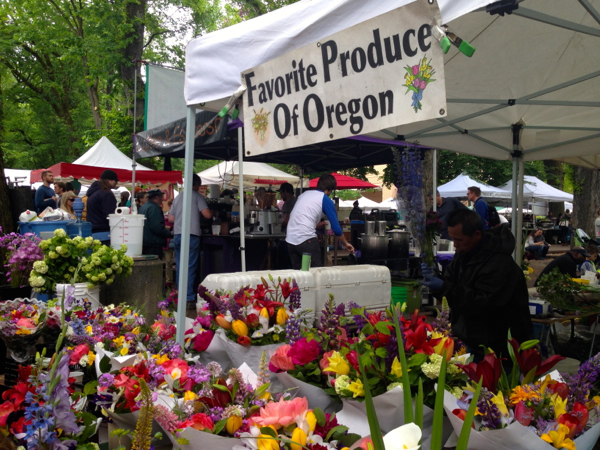
How good is this platter of luscious summer fruit prepared by Maurie? All ingredients were bought at the Capital Region Farmers Market in Canberra (apart from the mint, which came from our garden).
{ 2 comments }
How good is this platter of luscious summer fruit prepared by Maurie? All ingredients were bought at the Capital Region Farmers Market in Canberra (apart from the mint, which came from our garden).
{ 2 comments }
This gorgeous honeycomb is from Honey Delight, produced in Canberra by Carmen and Todd Brown. It’s so very apt for a Valentine’s Day post, given that the word honey is a common term of endearment. And honey is such a seductive food – sweet and golden, a nectar transformed by bees in a miracle of nature.
Honey is widely used in many cuisines not only because it tastes great but also because of its nutritional and medicinal properties. ‘Active Honey’ is one that is active against bacteria, but as anyone who regularly buys it knows, honey with antibacterial properties doesn’t come cheap.
The Browns looked at all the manuka honey being brought into Australia from New Zealand and realised that the same species of tree, Leptospermum scoparium, was growing locally.
After extensive testing, they produced their first Active Honey late last year, and the good news is that it is a very keenly priced $20 for 500 grams.
As far as I know, Honey Delight is the only 15+ honey produced in the Canberra region (or at least, that is labelled as such). It’s another great example of a small regional producer doing something wonderfully innovative.
Carmen Pearce-Brown comes from a family of four generations of beekeepers who have been making honey since 1928, originally in north-west NSW.
Currently studying for her Masters degree at ANU, she became interested in therapeutic honey while doing a thesis on “how to keep well”.
It led her to wonder if the tea tree growing locally – from the same species as the New Zealand manuka – had the same antibacterial properties as the New Zealand product.
Testing by the University of NSW confirmed that their honey had the requisite antibacterial properties for a 15+ rating.
The Browns sell their Honey Delight products every Saturday morning at the Capital Region Farmers Market, where their customers are keen to hear about the benefits of eating honey.
“We find people are very interested in how honey helps keep them healthy – they ask about the sugar content, the amount of antioxidants in honey, how local honey helps reduce hay fever, and which honey is best for you,” Carmen said.
“Food scientists around the world are uncovering the secrets of honey nutrition, and that means our understanding of how honey helps keep us healthy has come a long way. Having an affordable active honey can take us all in the direction to staying well and feeling more vibrant.”
“We are very excited to have a regionally produced honey that has such important properties. It brings this incredible honey into a price bracket that doesn’t include transport across the Tasman Sea, and the costs associated with import, and that’s going to be good for many people,” she said.
More on Honey Delight: www.bizzylizzysgoodthings.com; Honey Delight’s Facebook page.
{ 2 comments }
Icecream maker John Marshall likes playing around with flavours, so much so that he set up his own chemistry lab to create his own extracts. Since he established his business, Frugii, a few years ago, he has produced more than 100 flavours of icecream that he sells to some of Canberra’s leading restaurants.
Among the extracts he makes are cherry, ginger and licorice root. He makes his own vanilla extract using Tahitian or Madagascan vanilla beans, and sometimes even the vanilla beans that are now being grown in Queensland’s Daintree.
John welcomes us with a tall glass of banana icecream as we step into the fully equipped commercial kitchen that he has set up under his house at O’Malley. Made with fresh pureed banana, the icecream is topped with wickedly delicious dulce de leche, a Latin American condensed milk that is slowly heated till it turns to caramel.
The kitchen still has the small domestic machine that he started off with, but now he also has an impressive array of some of the world’s best commercial equipment, including large churners that can make eight litres of icecream in eight minutes, two induction hobs and a refractometre to check the sugar level of fruit.
Wherever possible, he uses fresh fruit to make his icecream and sorbets. “If it’s out of season (and a chef requests a particular icecream), I’ve got no choice (but to use frozen). I have a big blast freezer which allows me to put some product away for when it’s out of season. If I can’t get something like cherries, I give the chef a choice. I can track down frozen ones or they can use something else.”
Working with fruit can be a challenge. “With chocolate icecream, a good chocolate comes out of the bag, but working with fruit, that’s where it (making icecream) becomes more of an art.”
“Lemon juice, for example, changes from week to week. People don’t like a lemon sorbet that is too sweet. If the lemon juice is too sweet, you have to use different sugars. The lemons could be tart a few weeks later. I’m trying to work a recipe to suit the juice on the day. It depends as well on what the chef wants to put the lemon sorbet with. Because I’m trying to do top-end stuff, I’m showing seasonal variations and making the best of it.”
John has thoroughly researched every ingredient that goes into icecream. He says most people are unaware that there are a lot of different sugars, all of which have different sweetening powers and different freezing properties.
A passionate cook since the age of 12 when he was given a copy of Larousse Gastronomique, he started dabbling in icecream about seven years ago. “I was intrigued by it, and I love desserts. When I go to a restaurant, I check out the desserts so I can order the other dishes accordingly.”
Growing up in a council house in the West Midlands in England, it was unusual for boys to have cookbooks. “I still remember, I turned this book open and I saw this beautiful piece of bread. I made it and I thought, ‘this looks easy’.”
Although largely self-taught, John has done a number of courses in making icecream, as well as chocolates and cakes. These other creations have become a happy sideline to his icecream venture.
“When I ventured into finding all about chocolate, I got in contact with Kirsten Tibbles of www.savourschool.com.au. She is a recognised expert of the pastry and chocolate field and has a school in Melbourne. I now attend around twice a year for two courses that are taught by high-end French pastry chefs. (They) keep me up to date with all the latest trends that are happening in Europe.”
John uses the very best chocolate available, typically Callebaut Single Origin, Cocoa Barry, Valhrona, and “last but not least – the best in the world for the past three years, Amedei Chuao 70%.”
He enjoys experimenting for clients, and his small domestic icecream machine still comes in handy for when he is making an experimental batch.
Pulp Kitchen has his mango sorbet, pistachio and vodka icecream, and calvados brandy icecream on its menu, while the Shepherd’s Run cafe/cellar door at Wamboin has his gewürztraminer icecream. Cape Cod serves his green apple sorbet with smoked salmon for a delightfully different starter. Other venues that take his product include Hotel Realm and the Royal Canberra Golf Club.
John is not convinced that fat makes a good mouthfeel in icecream. “I don’t like too high a fat content. I like it more like a gelati. I like a lower fat because I think fat masks flavour. A lot of the milk I use is skim milk so I could in theory say it’s a low-fat icecream.”
His favourite flavour? “I haven’t got one. It depends on my mood.”
{ 0 comments }