Wine Features

Going for Broke

by Christine Salins on May 5, 2009

Published in Australian Wine Selectors.

When influential American wine critic Robert Parker awarded 91 points to the 2002 Margan Family Verdelho late last year, the US and Canadian markets couldn’t get enough of the dry, spicy white varietal.

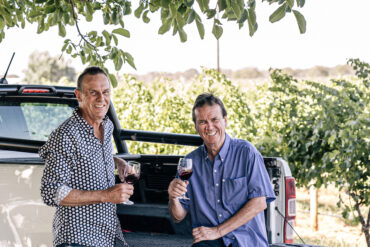
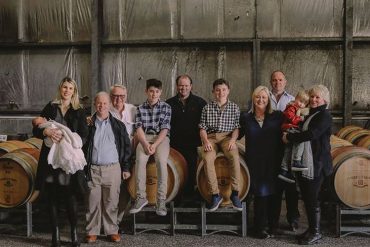
“We shipped everything we had to the US on the back of that review,” said winemaker Andrew Margan, a leading producer in Broke Fordwich.

This tiny sub-region of the Hunter Valley produces some of the world’s finest Verdelho from some of the world’s oldest Verdelho plantings. Located between Pokolbin and Wollombi, its unique micro-climate produces juicier-fleshed, later-ripening fruit with distinct varietal character.

Margan, who is president of the Broke Fordwich Winegrowers Association, attributes the quality of Broke Verdelho to the age of the vines. Many were planted in the late 1960s, early 1970s, though some date back to just after World War I. While this might not sound particularly old, Margan says there is so little Verdelho grown in the world, that it is even rarer to find some with age.

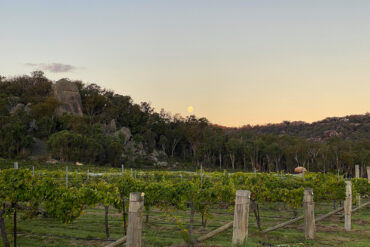
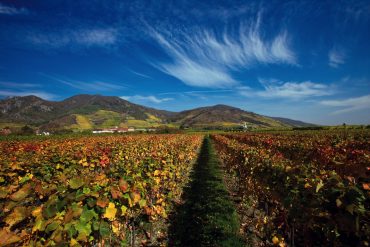
Broke Fordwich lies in the heart of the picturesque BrokeValley, the villageof Brokenestling at the base of the Brokenback and HunterRangeson the Wollombi Brook. The ranges shelter the area from much of the rainfall that surrounding districts receive and this, together with the soil – which ranges from sandy loam to river flat alluvial soil, red volcanic soil and pockets of red basalt, not unlike the Coonawarra terra rossa - accounts for the area’s uniqueness.

Acknowledging its special characteristics, the Geographical Indications Committee gave Broke Fordwich its appellation in 1994. It was the first area formally recognised as a separate viticultural sub-region of the Hunter.

While the Winegrowers Association doesn’t align itself with any one particular variety, and Margan’s biggest seller is Semillon, he says the sub-region is becoming distinguished for its Verdelho, not just by consumers but also by the Hunter wine industry.

“We have a mixture of red basalt volcanic soil which gives (the wine) a richer riper character, and sandy soil that makes it lean and appley,” he said. “Whether you combine the characters, as we do, or keep them separate, what you get is something very distinctive.”

Margan is critical of show judges who he says do not “recognise the variety and understand the strength of it enough to reward Verdelho the way it should be”. However, public acceptance of the varietal has grown enormously in the past year, with many people seeking a dry medium-bodied alternative to Chardonnay.

Chardonnay remains the biggest selling white varietal because it is medium-bodied and complements a range of cuisines, and much the same could be said of Verdelho. “The average customer wants more flavour than Semillon or Riesling is going to deliver.”

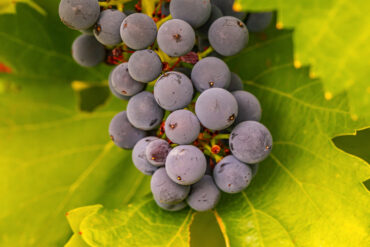
The Margan Family Verdelho is a big wine with tropical fruit characters and lingering spice. The vines, which grew from cuttings that were taken off plantings dating from soon after World War I, yield less than two tonnes to the acre.

Last year, Margan and his wife, Lisa, added to their vineyard holdings with the purchase of one of Lindemans’ old Saxonvale vineyards. The 40ha property has 35-year-old vines including low-yieldingShiraz, Semillon and Chardonnay.

Margan makes wines for a number of growers in the area. With two science degrees, a hands-on apprenticeship under the late Murray Tyrrell and the experience of over 30 vintages inAustraliaandEurope, he manages his vineyards carefully so that the grapes can be picked at optimum ripeness, making them approachable while young but still having cellaring potential.

The Margans seeShirazand Semillon as their flagship wines, and their Semillon is definitely a force to be reckoned with. Riper than many, it is full and soft with citrus and grassy characters. They also do a Botrytis Semillon.

The 2002 Margan Family Shiraz is spicy and peppery with soft tannins but an interesting complexity. The vines yield on average only one tonne an acre, producing great flavour concentration. A small amount of mourvedre planted within the block adds a slightly floral character.

With around 52 vineyards and wineries in Broke Fordwich, and more than a quarter of the Hunter’s production coming from the area, it is hard to believe that just one generation ago there were only three vineyards in the area. There had been an earlier phase of production, however.

After World War 1, the land around Broke was subdivided into the Fordwich Soldiers Settlement Purchase Area, and many of the returning soldiers planted grapes on their 10 acre lots. Most were forced to leave between 1919 and 1930 due to poor grape prices and severe hail storms in 1929 and 1930 that decimated crops.

The Tulloch family took over many of the farms, selling the grapes to large Pokolbin wineries. Lindemans had the biggest holdings in the 1970s, but sold off its vineyards progressively from the mid 1980s.

Coal mining and agriculture are still big industries in the area, but today, grapes have replaced dairy cattle as the predominant agricultural activity. A reminder of the area’s dairying history can be found at Mount Broke Wines, where Phil and Jo McNamara have established their quirky Cow Cafe in a former dairy.

Open seven days a week from11am to 4pm, and on Friday nights for dinner, the café overlooks a picturesque vineyard leading down to the river, where the rich alluvial river flats produce some exceptionally goodShiraz.

MountBrokehas bottled its 2003 Verdelho, 2003 Semillon, 2002 Cabernet/Merlot and 2002 Barbera under screw-cap, the Barbera especially one to watch out for. Only 80 cases were released and none was picked in 2003.

Catherine Vale Wines makes two Italian reds, Dolcetto and Barbera, and will release its first Verdelho in 2004. It is opening a spectacular new cellar door shortly.

The French call it terroir but the late Bill Ryan preferred to talk about “somewhereness” when referring to the elusive combination of micro-climate, soil and aspect that lifts one wine above another.           It was the search for somewhere special that led Bill and his wife, Bliss, to look beyond the traditional Hunter grape-growing areas in Pokolbin and Rothbury and buy an old dairy property on the outskirts of Broke.

When they bought Broke Estate on Monkey Place Creek in 1988, they were among the viticultural pioneers who helped Broke Fordwich forge its distinct identity.

Fellow vigneronMaxLakeprovided invaluable inspiration and encouraged them to concentrate on Cabernet Sauvignon, Cabernet Franc, Chardonnay and Sauvignon Blanc rather than the traditional Hunter varieties,Shirazand Semillon.

Bill believed the climate and the deep, fertile soils would stand him in good stead and most vintages have borne out his theory. He quickly realised his vines were more vigorous than those at Pokolbin, so he enlisted the help of viticulturalist Dr Richard Smart to devise more appropriate trellising and canopy management, leading the way for other growers who followed suit.

In 1995, the Ryans bought Minimbah, a grand 1870s homestead surrounded by 1000 acres of agricultural land, 12 acres of which have been planted with Chardonnay andShiraz. Minimbah is not open to the public, but the Broke Estate vineyard is, with the cellar door located in a quaint 1890s cottage crammed with nostalgia.

The Broke Estate range includes Chardonnay, Cabernet Sauvignon, Semillon and a quaintly named dessert wine Lacrima Angelorum (“Angel’s Tears”). Made from Sauvignon Blanc, it is produced in the Tuscan style without botrytis. The vines are severed at the trunk, leaving the fruit to dry on the trellis till they are almost like sultanas. A second Ryan label includes a cheaper, ready-to-drink Free Run (Unoaked) Chardonnay and Cabernet Blend.

Son William says the labels deliberately make no reference to theHunterValley.

“We believe that regionality is very important with premium wine, that Broke Fordwich is a genuine region in its own right and that Broke Estate has its own particular micro-climate. While we’re obviously part of theHunterValley, we regard our particular location as having significant differences to the Pokolbin-Rothbury area traditionally associated with the Hunter mostly because we’re a little bit further inland and have a few more hills separating us from the ocean.”

The Ryans’ other son, Matthew, and his wife Tina say the cellar door business is steadily growing, “with more and more people making their way to Broke looking for a more relaxed and unique experience. They like the fact that there are so many boutique growers here and that in most instances it is the winemaker/winegrowers who offer the wine tastings at the cellar door.”

Matthew and Tina will be releasing their own premium label in April, and will be opening a new cellar door onMilbrodale Road. Tina says the Idlewild label will initially include six wines.

“The range will include everything from Shiraz, Merlot, wild yeast Chardonnay, unwooded Chardonnay, Barbera, Cabernet Franc, Cabernet Sauvignon and a winemaker’s blend, but the line-up will be different each year, depending on which was the best fruit each year,” Tina said.

One of the bigger producers in Broke Fordwich is Poole’s Rock, owned by Macquarie Bank chairman, David Clarke. He wanted a bolt hole to escape to at weekends and, a keen wine buff, had long held a desire to venture into grape-growing.

Since its first vintage in 1990, the estate has earned a reputation for its finely crafted Chardonnay, served in many ofSydney’s top restaurants. The late Murray Tyrrell described the property as the “viticultural showpiece of theHunterValley”.

In 1994, Clarke expanded his holdings with the purchase of a 13 ha property on the banks of the Wollombi Brook near Broke. He named it Cockfighter’s Ghost after a local legend about a horse named Cockfighter which drowned in the river 175 years ago.

The vineyard is planted to Chardonnay and Semillon, and a small block of old-vineShirazmore than 50 years old. WhereasPoole’s Rock is an estate range, fruit for the Cockfighter’s Ghost label is sourced from both the property and from other parts ofAustralia.

One vigneron who gave up his career to follow his passion is Michael Hope, who left pharmacy to buy a vineyard at the base of theWollemiRangesin 1994. Hope Estate produced its first vintage in 1997 and last year exported wine to theUnited Kingdom,United States,JapanandNew Zealand. The line-up includes Semillon, Verdelho,Shiraz, Merlot and a hugely successful Chardonnay.

Paul and Gail Nightingale’s winemaking business came about because of a bet, but within a few short years Nightingale Wines was exporting toAsiaandBritain, as well as being sold aroundAustralia.

So particular are the Nightingales about quality that they didn’t release a Semillon in 2001 or 2002 because it wasn’t up to the standard they thought it should be. Now they are back with an elegant 2003 Semillon with racy acidity and lifted citrus notes.

Their Chardonnay is a lovely, buttery wine, their Merlot smooth and velvety and theirShirazhas the peppery spice notes which characterise Huntershiraz. All three were aged in American oak.

Their Café Nightingale, set in a beautifully manicured vineyard, offers indoor and alfresco dining from Thursday to Sunday,10am to 4pm. There are winery tours on weekends, and winemaker’s dinners on the first Saturday of every month.

Boutique producers include Bainton Family Wines, whose Wollemi Semillon is made from 70-year-old non-irrigated vines, and Louis Laval, an organic producer which charges an extraordinary $100 for its Chambourcin. Winemaker Roy Meyer says it walks out the door.

Elysium Vineyard produces a consistently good Verdelho in limited quantities, and provides guest accommodation in an historic ironbark cottage. Krinklewood’s cellar door is set in beautiful Provencal-style gardens.

Wattlebrook Vineyard supplies most of its grapes to major wineries but each year keeps a small portion for its own wines. The best grapes are hand-selected from over 80 acres of Chardonnay, Verdelho, Semillon and Shiraz vines, and the wines are snapped up by Sydney restaurants.

Like Wattlebrook, the Margan Family can’t keep up with demand. They planted another eight acres of Verdelho last year, because they were always falling short.

“With so little Verdelho grown around the world,” said Andrew, “there’s enormous opportunity for Australia to corner a significant market.”

© Christine Salins

{ 0 comments }

Canberra Pops Its Cork On Best Wines

by Christine Salins on February 18, 2009

Published in The Canberra Times Food & Wine section, February 18, 2009.

Tim Kirk’s Clonakilla Shiraz Viognier has achieved legendary status in Australian winemaking so when he says the Canberra District is producing some of the world’s best wine, you’ve got to believe him.

Kirk likes to think of wine as liquid geography – an expression of a region’s altitude, climate, soils, grapes and people combining to produce a unique geography. Canberra winemakers are running with the slogan to highlight the diversity of their region.

Ken Helm, who next to Kirk is probably Canberra’s highest-profile advocate, says it’s the great variation in altitude and micro-climates that makes the region so unique. With vineyards from 550m to 850m, it successfully produces Riesling, Chardonnay, Shiraz and Pinot Noir. Even Cabernet has been reeling in a string of awards.

Every classic variety performs magnificently somewhere in the Canberra District, says Helm. Particularly passionate about Riesling, he founded the International Riesling Challenge, held annually in Canberra, further helping to put the region on the map.

Winemaker Brian Croser is mightily impressed too. The chair of judges at the 2008 Canberra Regional Wine Show – where Helm’s 2008 Classic Dry Riesling won the trophy for Best Riesling – he said the Shiraz was world class and the Rieslings were in a “wonderful class (of wines),   demonstrating why Canberra is one of Australia’s great Riesling terroirs”.

Helm says Canberra’s rating with wine judges and critics has “jumped a couple of hundred per cent in the last two years.” Plantings have increased more than ten-fold over the past decade. “We’ve got over 500 ha in vines now, so the district is a serious winemaking district in size. Before that we were too small to be taken seriously.”

If any proof was needed that the Canberra wine industry had come of age, it surely came with the 2007 NSW Wine Awards, when Alex McKay’s 2005 Collector Wines Marked Tree Red was named NSW Wine of the Year, triumphing against 750 entries.

Shaw Vineyard Estate, had great success in the same awards, taking out two of the 10 trophies with its Cabernet Sauvignon and Cabernet Merlot. The same Shaw reds, different vintages, featured in the 2008 NSW Top 40, along with four other Canberra wines.

At the 2007 awards, chairman of judges Jim Brayne said the Canberra region was one to watch for reds. The district’s success was great news for people looking for wine’s “next big thing”, he said. “These Canberra reds are priced between $22 and $26, and they are all worth far more than that.”

Alex McKay says the district’s fruit is a lot more in balance now that the vines have some age – many vineyards are now 10 to 30 years old. McKay makes wine not only for his own label but also for Lake George Winery, whose wines feature on the lists of top Sydney restaurants such as Tetsuya’s and Quay.

McKay believes Shiraz is the district’s flagship variety but says the 2008 Rieslings were “right up there with Australia’s best”. 2008 was a great vintage for Canberra, with mild weather leading up to vintage and good rain in December and January.

“The Canberra District is blessed with having both granite and shale soils, and you’ve got a cool enough climate to give the wines some elegance and spice,” says McKay.

“Canberra Shiraz is medium-bodied but not lacking in intensity, and the market is coming to drink more of those styles of wines. Tim (Kirk) is making a wine that’s almost a Burgundy for Shiraz lovers. Part of the success of Canberra wine is not only that the wines have gotten better but the market is moving to that sort of style.”

© Christine Salins

{ 0 comments }

Clare Valley

by Christine Salins on November 27, 2003

Published in Vacations & Travel Autumn 2003 edition.

“A lot of people wanting to go to the Clare Valley end up at the Riverland,” lamented a tourist operator in this beautiful South Australian winemaking region.

Already overshadowed by the Barossa, it must be the ultimate blow for Clare winemakers when travellers from Adelaide whiz past the turn-off for Clare and end up somewhere around the bulk-wine producing facilities of the Riverland.

Those who do find their way are richly rewarded with delightful scenery, historic towns and superb food and wine, including some ofAustralia’s finest riesling.

The fog created an almost ethereal effect over the wooded hills as we drove to Skillogalee Wines, where hosts Dave and Diana Palmer greeted us in the pretty cottage garden of their quaint restaurant and cellar door, located in a stone cottage built nearly 150 years ago by a Cornish miner who apparently did not approve of drinking. One wonders what he would think of his property now.

When the Palmers bought the property from the George family, who had planted the vines in the early 1970s, they decided to serve some food as a sideline. The idea blossomed into a fully-fledged restaurant, open seven days a week (10am-5pm) with a choice of seating outside under the olive trees or inside the cute cottage with doors so low that visitors have to duck their heads.

A trained chef, Diana oversees the menu which uses local produce wherever possible, especially on her vine pruners’ lunch. Dishes might include specialities such as lamb from nearby Burra, linguine in a creamy riesling sauce, skewered yabbies with cucumber and coriander salad, or blissful little roulades of roasted red capsicum and Woodside goats’ curd. Picnic baskets are available by arrangement.

Last year the Palmers bought a neighbouring property with bed and breakfast accommodation in the Windermere Cottages. A stone farmhouse is being restored to provide additional accommodation.

Skillogalee produces an excellent riesling, an aromatic, spicy gewurtztraminer in theAlsacestyle,shirazand other wines from low-yielding vines.

A great way to explore the valley is by walking or cycling the Riesling Trail, which follows the old railway line betweenAuburnand Clare. The 27km route is lined with vineyards, old stone villages, historic wineries and country hotels. The line has been covered with gravel, making it easy to walk on, and bikes are available for hire at either end.

The trail starts at Mt Horrocks Wines, located in the formerAuburnrailway station and beautifully renovated by winemaker Stephanie Toole. She buys hand-picked grapes from highly respected Watervale growers and carefully crafts her wines, fermenting them in French oak. The cellar door and gardens are a showpiece, where visitors can relax over a light lunch at weekends.

Auburnis also the home of Taylors Wines, the largest of theClareValleywineries with a 500ha vineyard. Established in 1972, it is open daily.

While the valley excels at riesling, many of its reds are also worth seeking out, including those from Leasingham, which has been an integral part of the valley for more than 100 years. Its cellar door in Clare is open daily.

With a combined 30 years’ experience in the wine industry working for larger wine companies, Jane Willson admits that she and partner Steve Wiblin should have known better than to introduce another label into the marketplace.

Yet wine drinkers would have been the poorer if this enterprising duo had not decided to strike out on their own with their Neagle’s Rock label. After several years of resurrecting vineyards and buildings, they now have a cellar door and restaurant, George of Clare, serving creative food seven days and two nights a week.

Smack bang near the Riesling Trail is the chic Brice Hill Vineyard Restaurant, where I had desserts to die for: spiced quince tartlets with mascarpone infused with lavender honey, and almond meringues topped with toffee grapes and chocolate vine leaves. Paul Borland, who manages the restaurant with his wife Ally, previously worked as a chef at Peppers Mt Broughton in the NSW Southern Highlands. A downstairs wine bar features more casual meals than the fine dining upstairs.

One of the valley’s best-kept secrets is the restaurant at Eldredge Vineyard, where Amanda Waldron and Philip Scarles, who trained in classical French cuisine inLondon, serve Mediterranean-inspired lunches from Thursday to Sunday. They have established a niche for their gourmet preserves sold under the London Hill brand. They have planted an orchard that will eventually supply all their fruit and berries, buy olives and saltbush lamb locally, and raise their own free-range poultry.

One of the Clare Valley’s newest cellar doors, Kirrihill Estates, is the centrepiece for a $10 million ‘winery without walls’, with a cantilevered roof and sails to provide natural light, and a sloping site which takes advantage of gravity in the production process.

At the other end of the spectrum, Sevenhill Vineyard has a history dating back to 1851 when it was established by the Jesuits for sacramental wines. They still run it, albeit with a broader range of wines, offering tastings and sales Monday to Saturday in the old monastery cellars.

At nearby Thorn Park Country House, David Hay and Michael Speers pamper their guests with fine food and wine, warm hospitality and cooking classes. Their elegant 145-year-old stone and slate homestead has six guest rooms. Hay is a self-taught chef but has a flair with food, his training as an interior designer having given him an eye for detail.

HistoricAuburn, birthplace of Australian author and poet C J Dennis, was originally known as Tateham’s Waterhole, hence the name for Tatehams restaurant. Swiss owners Mike and Isabelle Jeandupeux have turned an underground passageway of the former general store into a fabulous cellar and their menu emphasises fresh produce in dishes such as riesling and truffle mousseline, and seasonal fruits withAuburnhoney jelly. They have four guest rooms with ensuites.

While it is grapes that have put the valley on the map, Tony and Susan Thorogood make their wine from apples. Their Thorogoods of Burra products are very sophisticated, although the manufacturing process is anything but as the wines are handcrafted in much the same way cider was made 100 years ago.

The Thorogoods arrived in the valley in 1989 and immediately fell in love with Burra. ‘We loved the old town, the countryside reminded Susan of the Yorkshire Dales where she grew up and I liked the rolling hills and fertile valleys,’ Tony said.

From their mudbrick cellar, opened in 1999, they sell fine apple wines and vintage ciders with delightful names such as Gold Dust, Misty Morning and Old Sleepy: all very appropriate when an excess of liquid gold brings on that sleepy feeling.

© Christine Salins

{ 0 comments }