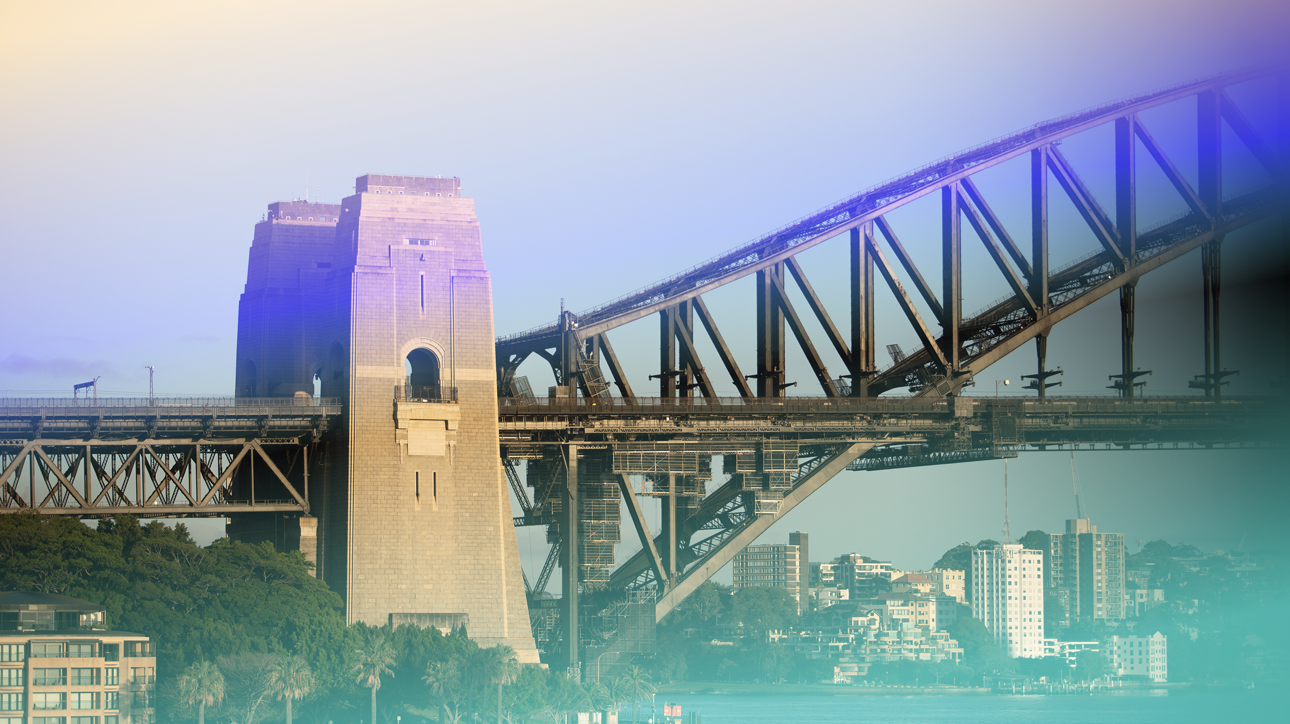
If you’ve ever wondered what’s inside the Sydney Harbour Bridge pylons, BridgeMuseum allows you to step inside and see for yourself — the south-east pylon at least. And if you visit the museum’s SkyHouse After Hours, you can enjoy one of the city’s best views of Sydney by night.
The south-east pylon has played host to many chapters of Sydney history since it opened in 1934, two years after the bridge itself. It’s had many incarnations, from serving as a World War II military lookout to housing a post office and even a family of white cats (more about that later). For many years, it housed a souvenir shop, café and exhibition of Australian sporting and industrial prowess.
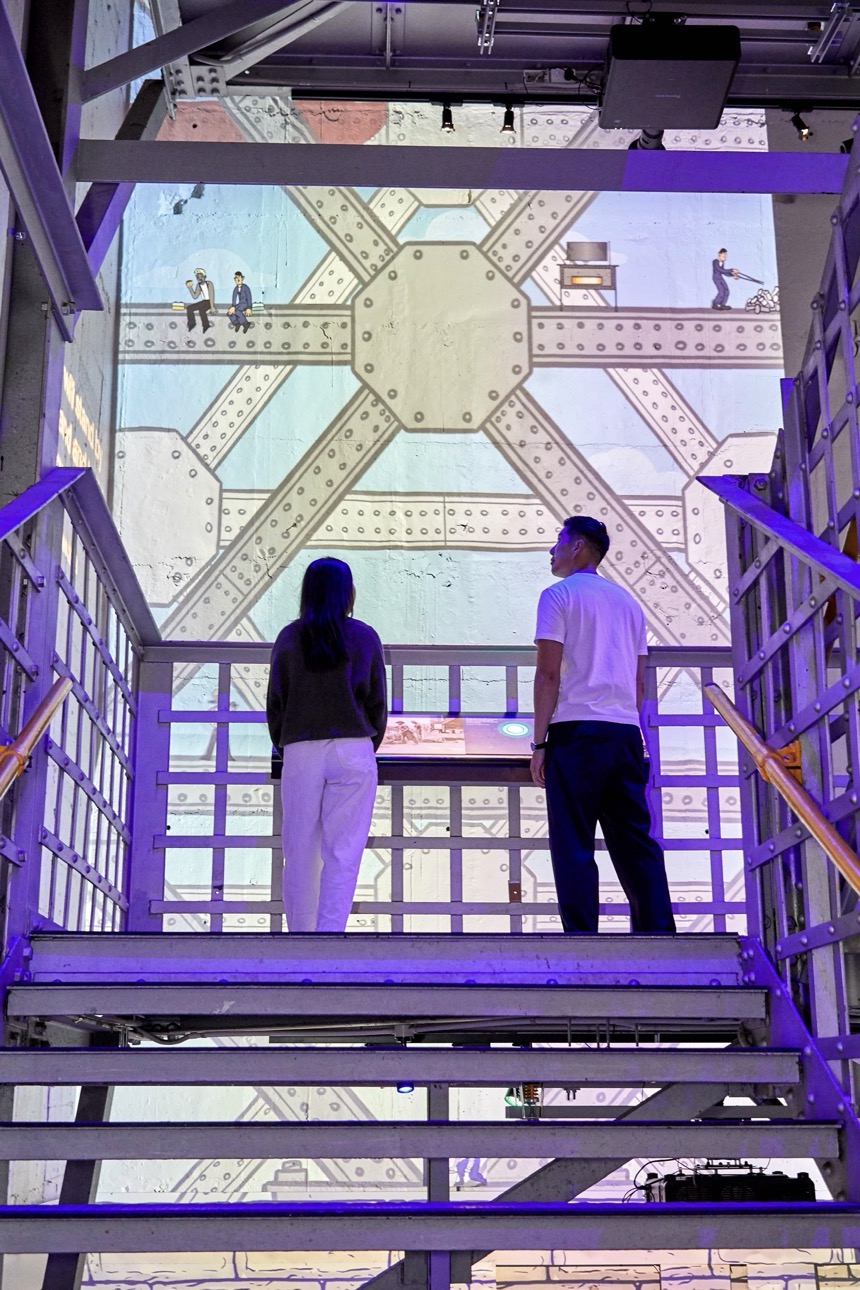
Now it has undergone a major transformation, re-opening a few months ago as a museum exploring the story of the bridge through immersive exhibits, multimedia storytelling, and historical memorabilia.
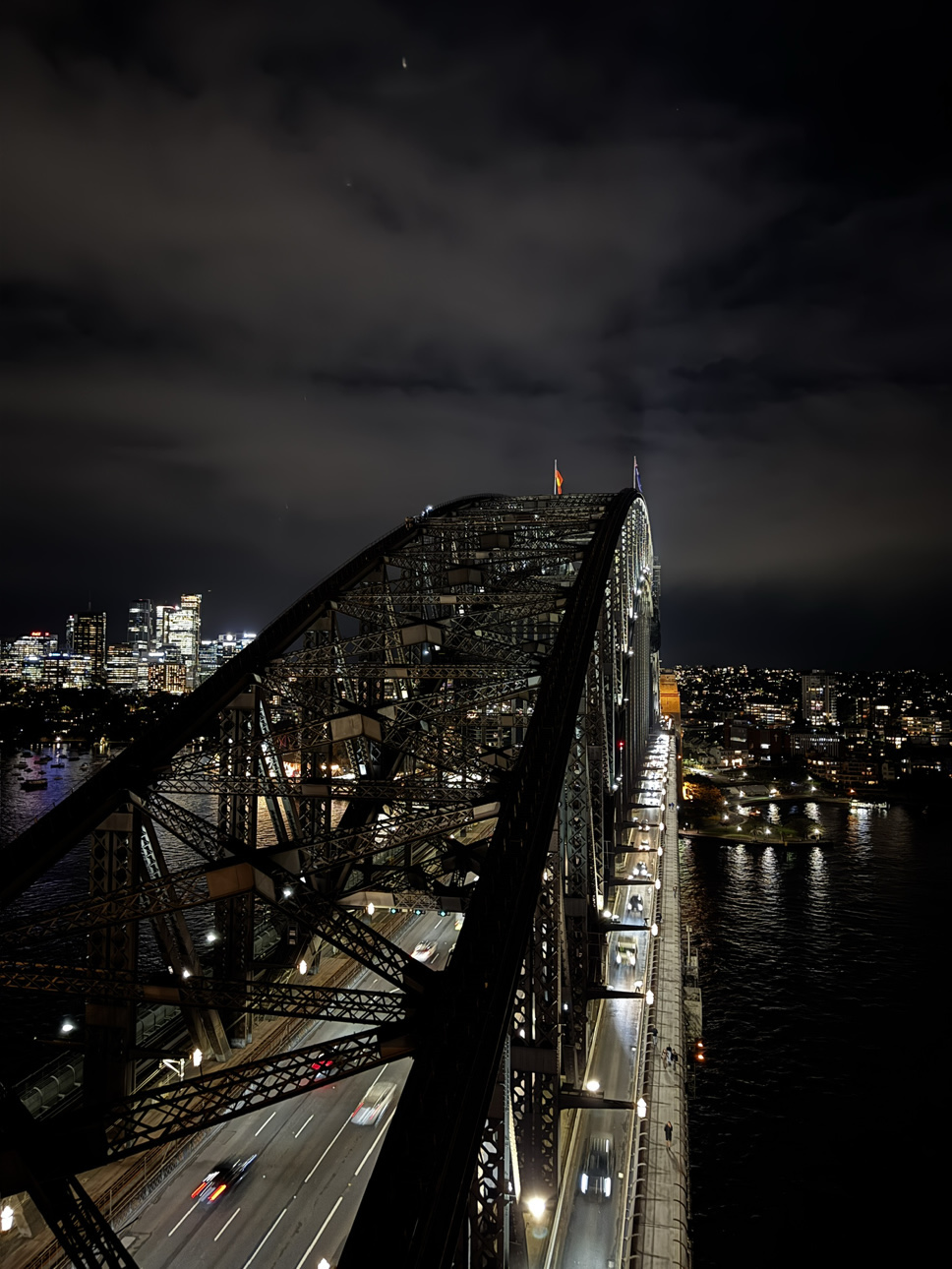
The Sydney Harbour Bridge is one of Australia’s most recognizable landmarks but the museum and entertainment space within its south-east pylon is a hidden gem. Present custodians, the Hammon family, who also operate BridgeClimb, funded its revitalization by leading creative agencies Thylacine and Eye Candy.
Thus we now have two distinct yet complementary experiences.
BridgeClimb offers the thrill and perspective of standing atop the Sydney Harbour Bridge, with a guide and surrounded by breathtaking 360-degree views.
BridgeMuseum brings the story to life from within – revealing the history, innovation and human stories behind the steel, providing an even deeper connection.
More than a link between Sydney’s north and south, the bridge unites people, stories, and generations. Our visit was particularly significant for Maurie who grew up in the shadow of the bridge and often heard his mother’s stories about being amongst the thousands of people at its opening. He also remembers the cats!
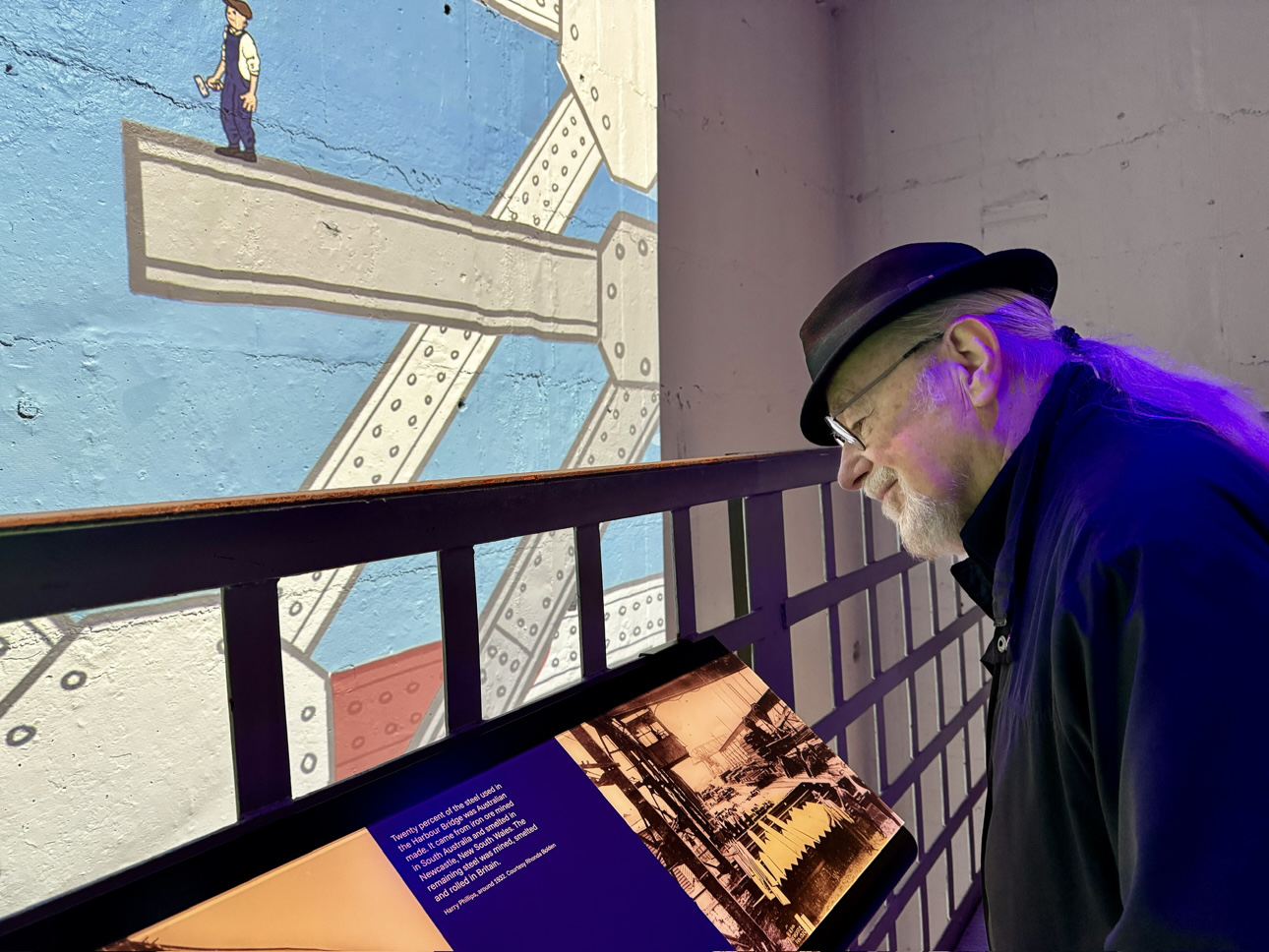
An engineering marvel for its day, the Sydney Harbour Bridge remains among the heaviest steel arch bridges ever built. Its primary architect, John Bradfield, showed great foresight in selecting the steel arch design for its strength and ability to accommodate four railway lines, six roadways and two pedestrian footways — far beyond Sydney’s transport needs at the time.
The bridge was a lifeline for many during the Great Depression (1929-1932), its eight years of construction providing regular employment not only for the 1,400 men who worked on the bridge but also for those sourcing and transporting the materials, and people providing food and accommodation to the workers.
Human stories
The museum weaves First Nations perspectives throughout the experience, illustrating the connection of the Gadigal people to Country and the harbour long before the bridge was built.
We also learn about the contribution of women, like Bradfield’s secretary Kathleen Butler, whose input was such that today she would be referred to as a project manager, and Dorothy ‘Dot’ Buchanan, who was part of the design team. The first woman in Britain to gain qualification as a civil engineer, Buchanan was paid the same as the men on the team, unusual for that time.
And why the white cats? The museum explains that too.
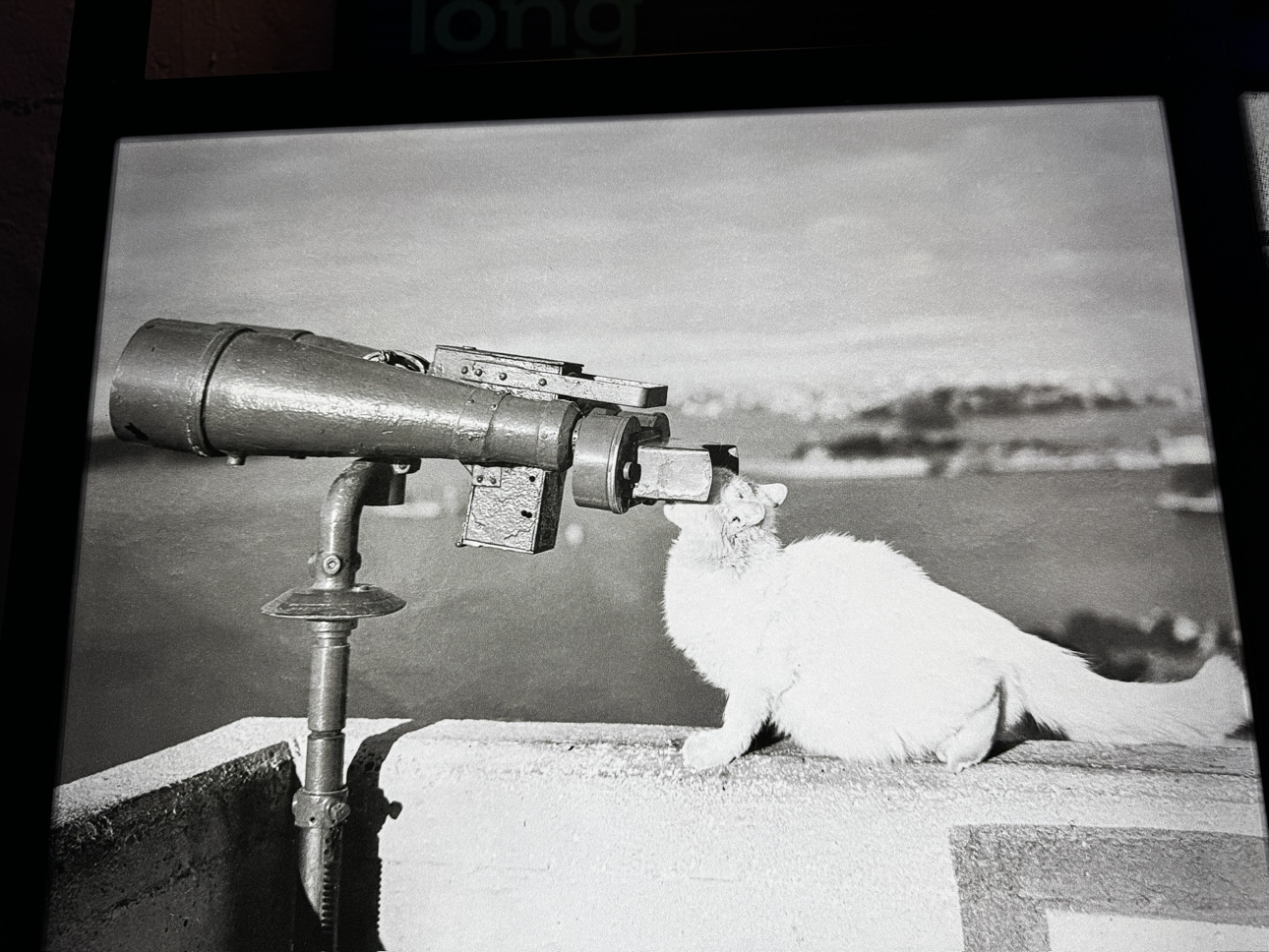
From 1948 until 1971, Yvonne Rentoul ran a popular souvenir shop and café in the pylon. Perhaps even more famous than her “All-Australian Exhibition” was a family of white cats that came to call the pylon home. Rentoul created a “cattage” on top of the pylon, complete with a wishing well and cat merry-go-round.
Today, the top of the pylon is a more sophisticated SkyHouse After Hours, the museum’s premium end-of-day offering where visitors can elevate their experience with drinks and canapés in a unique setting with stunning views.
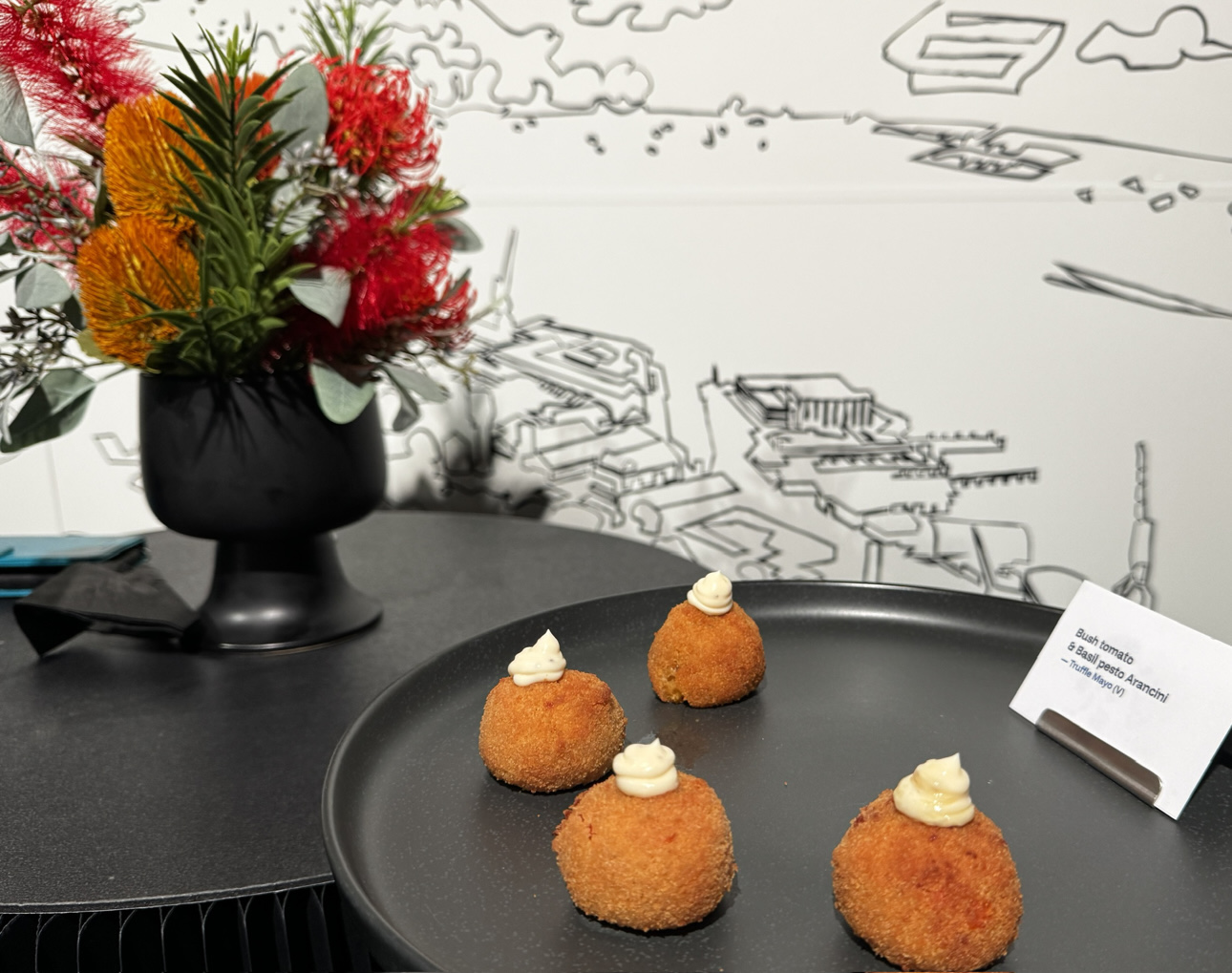
The recent refurbishments have created a light, bright space with cool graphics of Sydney locations that come to life as you trace your hand over them — don’t forget to do this, as it wasn’t immediately apparent to us that they were anything but static drawings. SkyHouse is also available for private hire.
We loved the pretty arrangements of Australian wildflowers and the small but considered drinks list featuring wine, beer and non-alcoholic drinks. Our glasses of Jansz Sparkling White were the perfect toast to childhood memories, Aussie achievement and one of the world’s finest harbours. And a family of white cats.
How to experience the BridgeMuseum
BridgeMuseum appeals to visitors of all ages. Visits are self-guided, with translations available in Mandarin, Korean, French, German and Japanese.
BridgeMuseum can be experienced on its own or as part of a combined ticket with BridgeClimb. Tickets are available from www.bridgemuseum.com.au
Getting to BridgeMuseum
It’s an easy walk from Wynyard Station to The Rocks where you can take a lift (or climb the stairs) in Cumberland Street, opposite The Glenmore Hotel.
As you emerge from the lift onto the bridge’s pedestrian footpath, turn right and walk north for 300 metres until you reach the entrance to BridgeMuseum in the south-east pylon.
Note that once you enter the pylon, there is no lift (owing to the pylon’s heritage status). You’ll have to climb quite a lot of stairs to see the museum exhibits — 200 stairs if you want to go all the way to SkyHouse at the top.
But there are plenty of places to stop and rest along the way, and you can do it at a leisurely pace as you take your time to interact with the exhibits.
The experience isn’t suitable for people in a wheelchair. Nor is it suitable for those with an injury or who can’t climb or descend stairs unaided. But anyone else will manage just fine. Believe me, if I can do it anyone can.
Food Wine Travel visited BridgeMuseum and SkyHouse After Hours as guests of the operator.